 Aspirational
10 Jobs That Let You Work Outdoors
Ten outdoor roles ranked from the quickest to enter to the ones needing real training, with the certificate or season that gets you on a crew.
By Marisol Andrade · Published · 14 min read
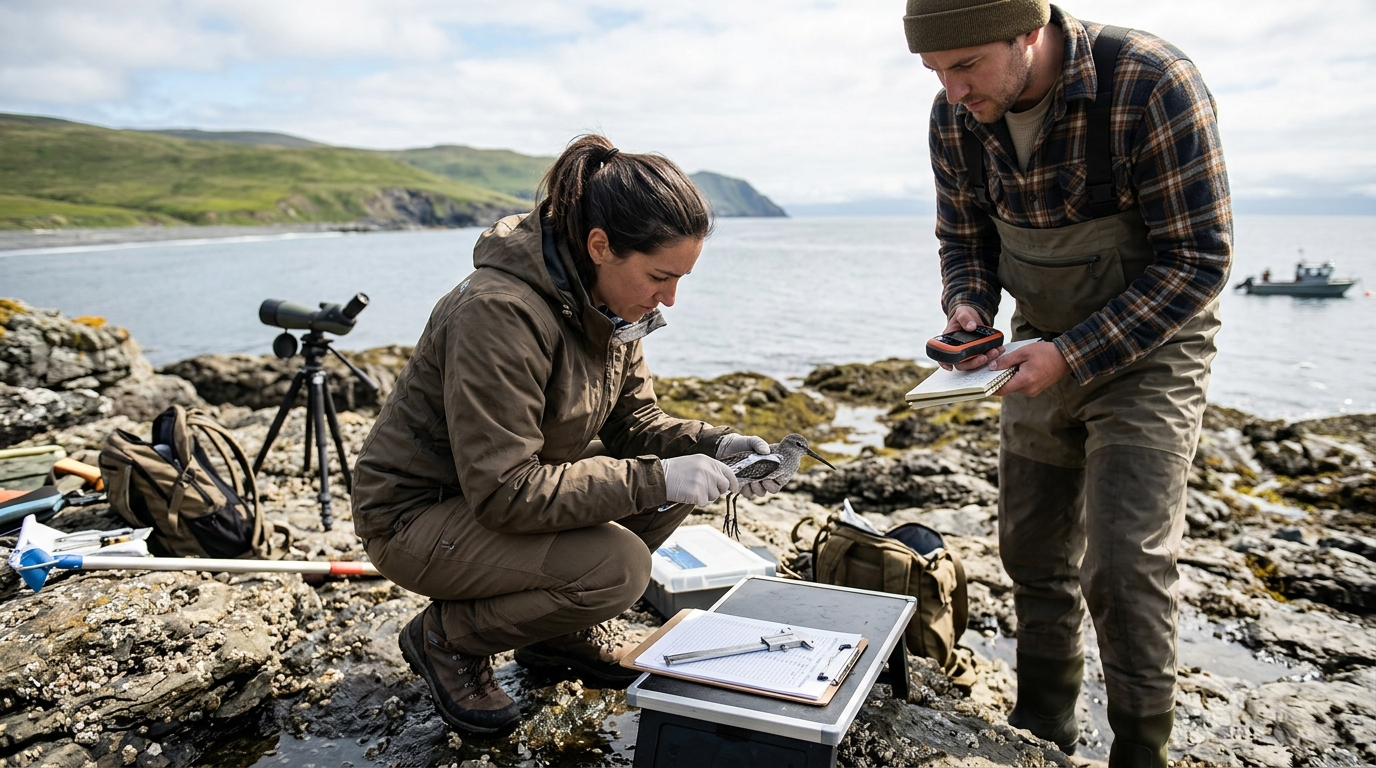
If you want work that happens outside, the realistic routes in are seasonal grounds and parks crews, entry-level construction and tree work, guiding and field technician jobs, and skilled trades like solar installation and land surveying. Most start with a short certification, a seasonal hire, or a physical test rather than a degree.
This list is ranked from the lowest barrier to entry upward. Every role below varies by employer and by state — licensing, season length and pay structure are rarely the same in two places.
How we chose this list
The ranking criterion is simple: how quickly a motivated beginner with no specialist background can get hired and spend most of the working day outdoors. Number one takes the least time and money to enter; number ten takes the most, and usually pays back that investment with steadier year-round work.
Three things decided the order:
- Entry barrier. Whether you need a licence, a certification, a physical test, or just a willingness to show up on time with boots.
- Share of the day spent outside. Jobs where weather is the main variable in your schedule ranked higher than jobs with a truck cab or site office attached.
- A visible first step. Each role has one concrete thing you can do this month — a card, a certificate, a seasonal application window, or a documented project.
There is no national survey behind this order. It is an editorial ranking built on how these roles are typically entered in the US, and the picture shifts across state lines: pesticide, arborist, guiding and contractor licences are state-issued, hiring seasons differ between northern and southern states, and outside the US the licensing systems are different again.
The honest downside, stated up front. Outdoor work is physical and a lot of it is seasonal, which means layoffs in the off-season, variable hours when it rains, and sometimes travel or camp accommodation away from home. Injury rates in construction, tree care and wildland fire are real and the work is hard on knees, backs and shoulders over a career. Pay is usually hourly, often with overtime, hazard pay or per diem on top; some guiding and agricultural work is paid daily or by the trip. Check current pay for any role in the BLS Occupational Outlook Handbook and with your state labor department before you commit, and ask directly about season length at interview.
The list at a glance
| # | Job | How to build it | Rough time to first job |
|---|---|---|---|
| 1 | Landscaping and grounds crew | Learn mower, trimmer and blower basics; take OSHA 10 (construction or general industry) | 1-4 weeks |
| 2 | Lifeguard and aquatics staff | Pass a swim test and a recognised lifeguarding, CPR and first aid certification | 2-6 weeks |
| 3 | Parks and trail crew | Apply in the winter hiring window; add Wilderness First Aid and basic hand-tool experience | 1-5 months, seasonal |
| 4 | Construction laborer | Get OSHA 10, steel-toe boots and a referral from a site superintendent or union hall | 2-8 weeks |
| 5 | Tree care groundperson | Start on the ground crew; work toward the Certified Arborist credential | 2 weeks to start, 2-3 years to certify |
| 6 | Outdoor guide or instructor | Earn Wilderness First Responder plus one discipline certification; log trip days | 2-6 months |
| 7 | Farm and agricultural technician | Work a season; add a state pesticide applicator licence or crop scouting training | 1-6 months |
| 8 | Wildland firefighter | Complete S-130/S-190 and the arduous pack test for an incident qualification card | 3-9 months to a season |
| 9 | Solar PV installer | Enter as a helper; add OSHA 30 and an industry PV installation certification | 1-2 months to start, 1-2 years to certify |
| 10 | Land surveying technician | Learn total station and GNSS on a rod crew; pass the Fundamentals of Surveying exam | 1-3 months to start, 2-4 years to licence track |
Each item in detail
1. Landscaping and grounds crew
Mowing, edging, planting, mulching, irrigation repairs and snow clearing for commercial properties, municipalities, golf courses or residential routes. It is the fastest outdoor job to enter and the most common first rung.
Build it by taking an OSHA 10-hour card online (one to two evenings) and spending two or three weekends doing documented yard work — before and after photos of a bed renovation, a repaired irrigation zone, a pruned hedge row. If you want a route upward, start the training for your state's pesticide applicator licence, which turns a seasonal hire into a year-round technician.
On a resume, list equipment by name: zero-turn mower, string trimmer, backpack blower, stick edger, plate compactor. In the interview, say how early you can start and whether you can work in rain, because scheduling reliability is what crew leaders screen for.
2. Lifeguard and aquatics staff
Pool, waterfront and waterpark supervision, plus swim instruction. Hiring is heavily seasonal in northern states and year-round at indoor facilities and in southern ones, and many employers will pay for your certification if you commit to a season.
Build it by booking a lifeguarding course that includes CPR/AED for the professional rescuer and first aid — typically 25 to 30 hours over one or two weekends, with a swim test at the start. Add a waterfront or shallow-water module if you want lake and camp work, and a Water Safety Instructor credential to teach lessons at a higher rate.
Show it by listing the certification name and expiry date, and by naming the environment you are rated for: indoor pool, open water, surf, waterpark slide tower. In interviews, walk through one scenario — distressed swimmer, spinal backboarding, cleared pool after a thunderstorm — in the order you were trained to do it.
3. Parks and trail crew
Seasonal work with federal, state, county or city parks and with conservation corps: trail construction, campground maintenance, invasive species removal, visitor contact. It is the clearest way to spend an entire season outdoors and a common entry route into natural resources careers.
Build it by applying in the winter window — many agencies post summer positions from December through February — and by joining a volunteer trail crew for four to eight weekend days in advance so you have a supervisor who will take a reference call. Add Wilderness First Aid (16 hours) and a chainsaw safety course if the postings in your area ask for them.
On applications, describe tasks in agency language: rock work, tread repair, drainage structures, brushing, backcountry camping for multi-day hitches. Say plainly that you can carry a loaded pack over distance, because that is the physical question behind the posting.
4. Construction laborer
Site work for general contractors, civil and utility outfits: excavation support, forming and pouring concrete, demolition, material handling, traffic control. It runs year-round in most climates with weather days off, and it is the broadest doorway into the trades.
Build it by completing OSHA 10 for construction, buying steel-toed boots and a hard hat, and then doing two specific things: visit your local union hall or apprenticeship readiness program to ask about intake dates, and get a flagger certification if your state requires one for work zones. Add a basic NCCER core credential if local employers list it.
On a resume, put safety cards first, then tools you have used — jumping jack compactor, rebar tying, concrete vibrator, laser level. In interviews, answer the question behind the question: do you have reliable transportation to a 6am start at a changing site address.
5. Tree care groundperson, then arborist
Ground crew feed the chipper, manage ropes, rig limbs down and do cleanup while a climber works aloft. It is hard, loud work with serious hazards, and it has one of the clearest skill ladders in outdoor work: groundperson, climber, crew leader, certified arborist, sales representative.
Build it by hiring on with a local tree service in spring, learning knots and chipper safety on the job, then working toward the Certified Arborist credential, which requires documented experience — usually around three years — plus an exam. Many climbers train on a rigged practice tree on weekends for a year before their first production climb.
Show it by listing climbing systems and equipment you have handled, storm response work, and any utility line clearance training. In interviews, describe one rigging job from setup to cleanup, including what you did to keep the drop zone clear.
6. Outdoor guide or instructor
Rafting, climbing, hunting and fishing, backpacking, cycling, snow sports and outdoor education for schools and camps. Days are long, seasons are defined, and in many states commercial guiding on public land requires the operator to hold permits — so you are hired into someone else's permit rather than starting alone.
Build it with Wilderness First Responder (70 to 80 hours over 8 to 10 days) plus one discipline credential: a swiftwater rescue course, a single pitch climbing instructor assessment, an avalanche course, or a state guide licence where one exists. Then log trip days in a notebook — date, river or route, group size, conditions, incidents.
On a resume, present that log as numbers of days and trips rather than adjectives. In interviews, expect a question about a group member who ignored a safety briefing; answer with what you said, not how you felt.
7. Farm and agricultural technician
Field work for growers, seed companies, co-ops and research stations: irrigation, planting and harvest, crop scouting, soil sampling, equipment operation, data collection for trials. Work is seasonal in most regions and year-round in irrigated and greenhouse-adjacent operations.
Build it by working one full season on a vegetable or row crop operation, then adding two credentials that raise you above general labor: your state's pesticide applicator licence and crop scouting or agronomy training through your state's extension service. A documented project helps — scout a 40-acre field weekly for a season and keep pest pressure notes with photos.
Show it by naming crops, acreage and equipment: tractor horsepower class, planter, sprayer, moisture meter, soil probe. In interviews, talk about harvest hours honestly, because employers want to know you understand what a 14-hour day in September looks like.
8. Wildland firefighter
Seasonal and increasingly year-round work on engine crews, hand crews, hotshot crews and helitack with federal, state, tribal and private employers. Fire assignments mean long rolls away from home, camp living and high overtime, and the hazards are obvious.
Build it by completing the S-130/S-190 basic wildland fire training sequence and the arduous pack test — three miles with a 45-pound pack inside 45 minutes — which together produce the incident qualification card employers ask for. Train for the pack test for 8 to 12 weeks before you attempt it. Apply during the federal and state hiring windows, which usually open in the fall and winter for the following season.
On applications, list your qualification card, your pack test rating and any chainsaw or EMT credential. In interviews, be specific about your current running and rucking load and your availability for 14-day assignments.
9. Solar PV installer
Rooftop and ground-mount installation: racking, module setting, conduit runs, inverter and combiner work, commissioning. You start as a helper and move into lead installer or electrical apprenticeship, and the work is outdoors in direct sun with real fall hazards.
Build it by getting OSHA 30 and a fall protection course, applying as an installation helper with residential contractors, and then pursuing an industry PV installation professional certification once you have the required hours — typically a year or more on site. If you want the strongest long-term position, ask an electrical apprenticeship coordinator about intake dates, since licensed electricians lead most crews.
On a resume, count systems: number of residential arrays, roof types worked, racking systems used, whether you have done service and troubleshooting. In interviews, describe your fall protection setup on a steep composition roof step by step.
10. Land surveying technician
Field crews measure and stake boundaries, topography and construction layout using total stations, GNSS receivers and increasingly drones. You are outside most days, in brush, on highways and on active sites, with office time for data processing as you advance.
Build it by applying as a rodperson or instrument operator with a civil engineering or surveying firm — many hire with a high school diploma and train you — and learning one software package end to end on a practice job. Add an FAA Part 107 Remote Pilot Certificate (two to six weeks of study) if you want the drone mapping work. The professional path runs through the Fundamentals of Surveying exam, then years of supervised experience toward state licensure.
Show it by listing instruments and software by name and describing one project: boundary retracement, as-built survey, construction stakeout. In interviews, expect math questions about traverse closure and bearings.
Where to start
| Your situation | Start with | Why |
|---|---|---|
| First job, still in school | 2 Lifeguard, 1 Landscaping | Certification is short, hiring is seasonal and forgiving, and both give you a supervisor reference for everything after |
| Career changer, no trade background | 4 Construction laborer, 5 Tree care groundperson | Both hire on attitude and attendance, train you on site, and have a visible ladder within two to three years |
| You want a season outdoors before deciding | 3 Parks and trail crew, 8 Wildland firefighter | Fixed-length seasons let you test the life without quitting a career permanently; apply in the winter window |
| You already have a trade or electrical background | 9 Solar PV installer | Your existing safety cards and tool skills transfer immediately and lead crews are the bottleneck |
| You like measurement, maps and data | 10 Land surveying technician, plus Part 107 | Outdoor fieldwork with a licensure path that keeps paying when your knees stop enjoying shovels |
| You want year-round outdoor work, not seasonal | 5 Tree care, 9 Solar, 10 Surveying | These run through most of the year in most climates, with weather delays rather than layoffs |
| You have land, farm or equipment experience | 7 Farm and agricultural technician | A state applicator licence and scouting training convert general farm labor into a technician role |
| You want people-facing outdoor work | 6 Outdoor guide or instructor | Teaching and group management are the skill, and WFR plus one discipline credential is the entry package |
Frequently asked questions
Which job should I go after first?
Pick by what you can start this month. If you can pass a swim test, lifeguarding gives you a certification and a paycheck faster than anything else on the list. If you cannot, landscaping and construction labor both hire on reliability and a safety card. Treat your first outdoor job as the thing that gets you a supervisor who will take a reference call — that reference opens the next three. If you already know you want tree care, surveying or solar, go straight to a ground or helper role at a local firm rather than taking a course first; most of these trades train on site and value the hours more than the certificate.
How long until I am actually working outside?
Two to eight weeks for the first four roles, assuming you apply in season. Guiding and farm technician work take one to six months because you need either a credential sequence or a season of logged days. Wildland fire runs on a hiring calendar: training and a pack test take a few months, and applications usually open in fall and winter for the following summer, so you may wait most of a year for your first assignment. Solar and surveying let you start quickly as a helper but take one to four years to reach certified or licensed level. Seasonal length varies sharply by state — a northern grounds crew season may be seven months while the same work runs year-round in the south.
How do I prove outdoor work experience when I have none?
Document something real before you apply. Volunteer trail days, a neighbor's irrigation repair, a season of weekend farm work, a photographed bed renovation — all of these give you a date, a task and a person who can confirm it. Put safety cards at the top of the resume and list equipment by name underneath. > **Interview answer when you are asked about experience** > I have not worked a commercial crew yet. I spent [X] weekend days on [trail crew or project], I hold [certification] dated [month/year], and I have run [specific equipment]. I can start at [time] and I have my own transportation and boots.
How should I check what these jobs pay before I commit?
Look up the occupation in the BLS Occupational Outlook Handbook for national and state figures, then check your state labor department's wage data for local numbers, since outdoor pay varies heavily by region and by whether work is union or non-union. Then ask three specific questions at interview: is the role hourly or salaried, how many weeks of the year does the crew work, and is there overtime, per diem or hazard pay on assignments. Seasonal roles sometimes include housing or camp accommodation, which changes the comparison entirely, and guiding work may be paid per trip or per day with tips on top.

Written by
Marisol Andrade
Marisol steers Jobguidedaily's coverage of career pivots and the messy middle of working life. She's drawn to the moment someone realizes their job title no longer fits who they are, and what they do next.